

BL Manga for Beginners Main Page
Part 02: BL Stories and Conventions ✧ Part 04: BL Events in Japan
Hello! Today’s topic of BL Manga for Beginners focuses on commercial manga serialization and comics releases in Japan. A lot of the information I mention here I’ve learned over time as I’ve gotten into different magazines/labels, purchased manga, and read Boys Love Manga and Beyond.
Note: While manga are often written and illustrated by a single person, manga can created by writer/artist duos or even groups. For the sake of simplification, I’ll refer to manga creators in general as “mangaka” (漫画家) in this post.
Intro to Manga Serialization
Commercial (商業) manga is primarily serialized by chapter. Manga series have traditionally been serialized in magazines, which collect chapters from multiple creators in each issue. Another term used besides magazine is “label”, and sometimes used interchangeably with magazines. With the rise of digital manga, some magazines/labels forego having a traditional magazine issue. Instead, they have series’ chapters individually and directly available for purchase. Publishers may have their own dedicated sites, or make them available on other platforms. Some traditional magazines have started offering the options of buying individual chapters too.
Manga magazines/labels include more than just serialized manga. Some manga are one-shots, known in Japanese as yomikiri (読み切り). Sometimes yomikiri end up becoming a serialized work! Another kind of short story in magazines is a bangaihen (番外編), which is an extra or bonus chapter of a serialized work. In traditional magazine issues, mangaka interviews and other editorial articles may be included too.
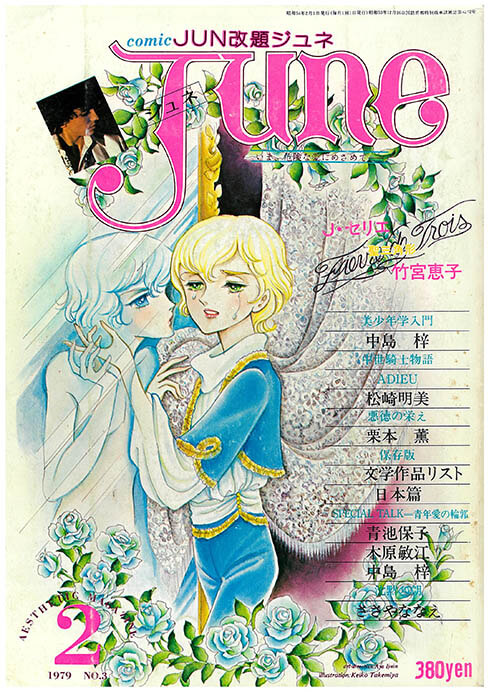
JUNE
JUNE was the first magazine dedicated to m/m manga and prose. It ran from 1978 to 1995, with a short break in 1979. A blog called Slightly Biased Manga actually has a post with some scans and information from the first issue of JUNE, when it was still called Comic JUN. JUNE was highly influential during its publication. One famous contributor to the magazine was Keiko Takemiya, the mangaka of Kaze to Ki no Uta. Original work that had conventions similar to stories from JUNE came to be known as original JUNE, or sosaku (創作) JUNE. This term is still used in doujinshi events to refer to original BL, often used alongside the term sosaku BL. So while the magazine ceased publication over 30 years ago, it still lives on in contemporary BL.
Modern BL Magazines and Labels
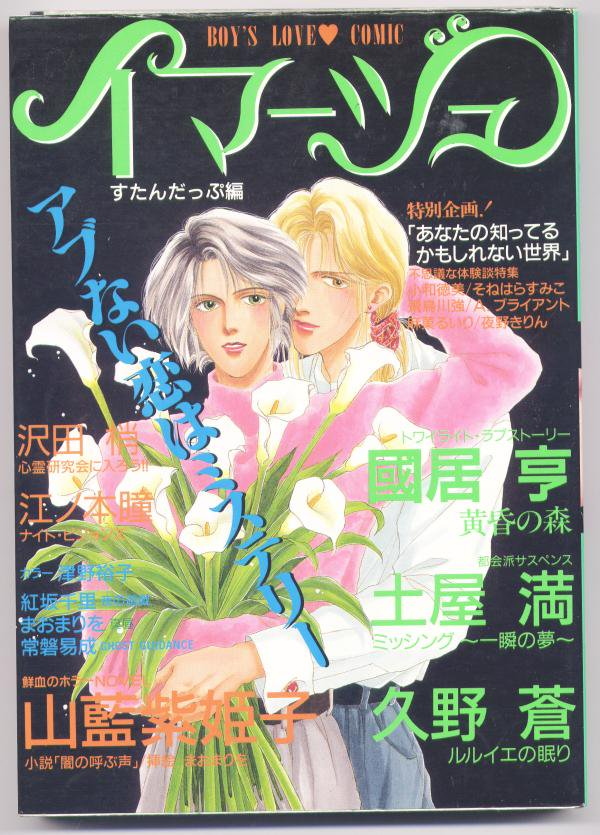
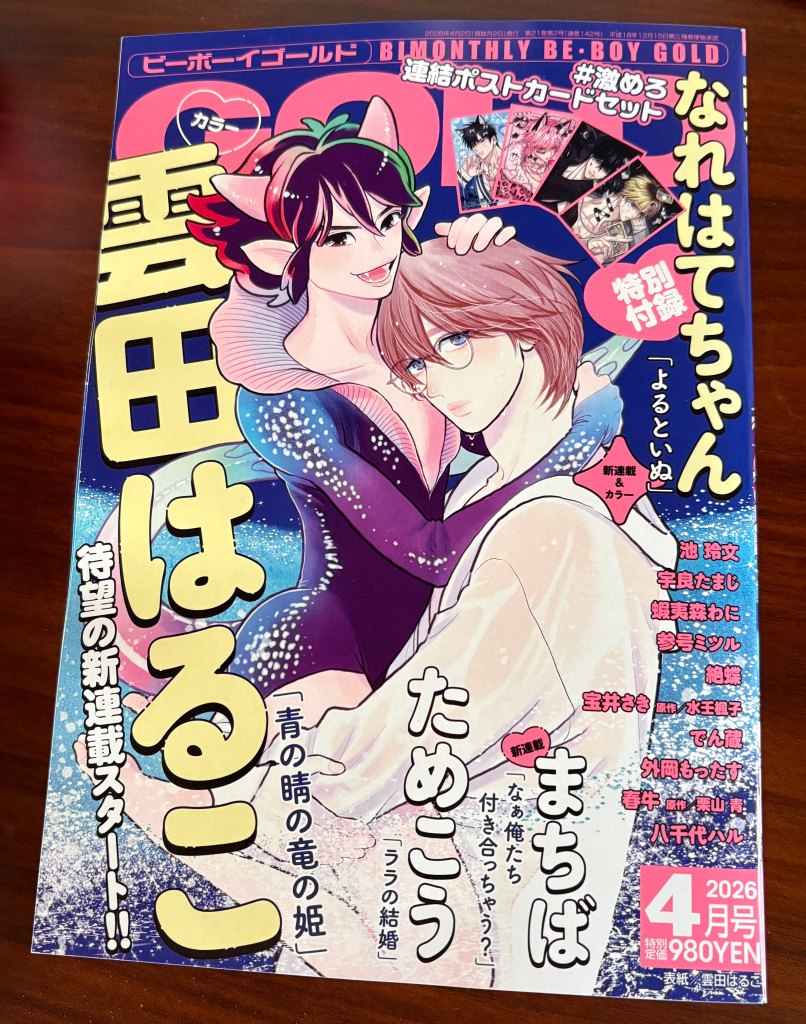
The modern BL genre began to really take shape in the 1990s. Image from Byakuya Shobo is said to be the first magazine to use the term “boys’ love”. While Image and a number of early BL magazines have ceased publication there are a few still ongoing. Ongoing magazines that started in the 90s include Magazine BE ・BOY from Biblos (ownership changed to Libre in 2006), Chara from Tokuma Shoten, RuTiLe from Gentosha, and Renjin from Takeshobo. BL magazine schedules vary, including monthly, every other month, and quarterly. With the majority of Japanese readers buying digital over print these days, many newer magazines are digital only like from RED. Some print magazines have also moved to digital entirely, such as Renjin and RuTiLe. As for digital labels, some examples Vinyl from Kobunsha, moment from ShuCream, and KiR from CLAP Comics.
Some BL manga series are published in magazines/ labels not confined to a single genre, like Monthly Comic Gene from Pixiv. Titles from this magazine include Minato’s Laundromat and Sasaki and Miyano. There are also a handful of BL titles published in shojo manga magazines too, like A Love too Captivating in Kodansha’s Besattsu Friend.
As for the length of BL manga, it’s very common for a series to be roughly 4-7 chapters and collected into a single volume at the end! Sometimes the serialization is renewed if popular, resulting in a continuation (続編) or sequel. This may go on for several “seasons”. There are stories that are multi-volume to begin with as well. Spin-offs focusing on secondary characters or couples are also popular.
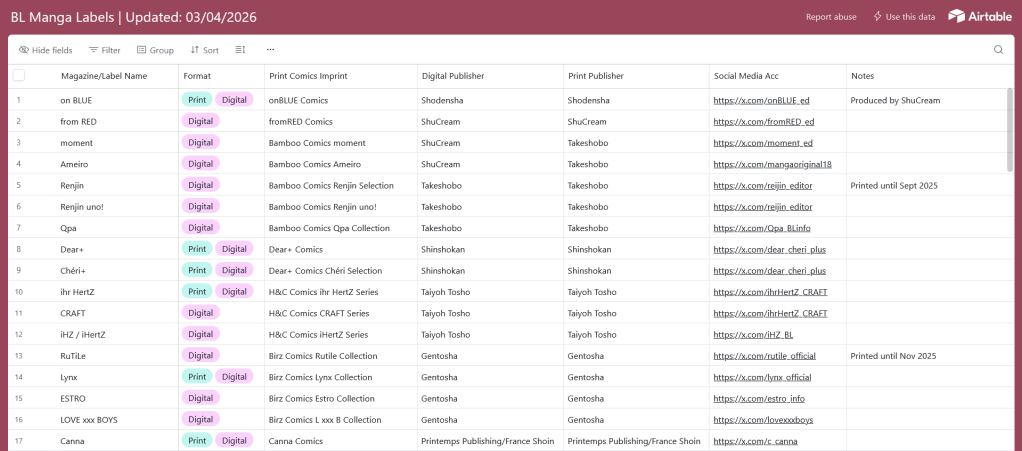
Over the last 35 years or so, BL manga magazines and labels have come and gone, but there still are plenty out there! I made a list of active BL magazines/labels, which includes links to the editorial department (編集部) social media accounts.
BL Comics/Tankobon Releases
After a several chapters or a serialization finishes, they are collected into a volume. In Japan, the loanword comics (コミックス) and tankobon (単行本) are used to describe these bound volumes. Comics sizes vary, but one of the most common ones are the Japanese B6 size and international A5. The counter used for manga volumes is kan (巻). Manga that are complete in two volumes often use the characters jo (上) and ge (下) to mark the first and second volumes respectively.
For printed comics, magazines/labels generally have an imprint of the same name, but there are occasional exceptions. Some digital only labels have series printed by different publishers. One case is Sonoo Michiru’s KOH-BOKU. Its digital publisher is COMPASS, but it’s printed by Shinshokan under the Dear+ Comics imprint. Print imprints are important, as manga are often grouped by publisher and imprint in bookstores. On a physical book, the imprint name is often located at the top of the spine of the dust jacket.
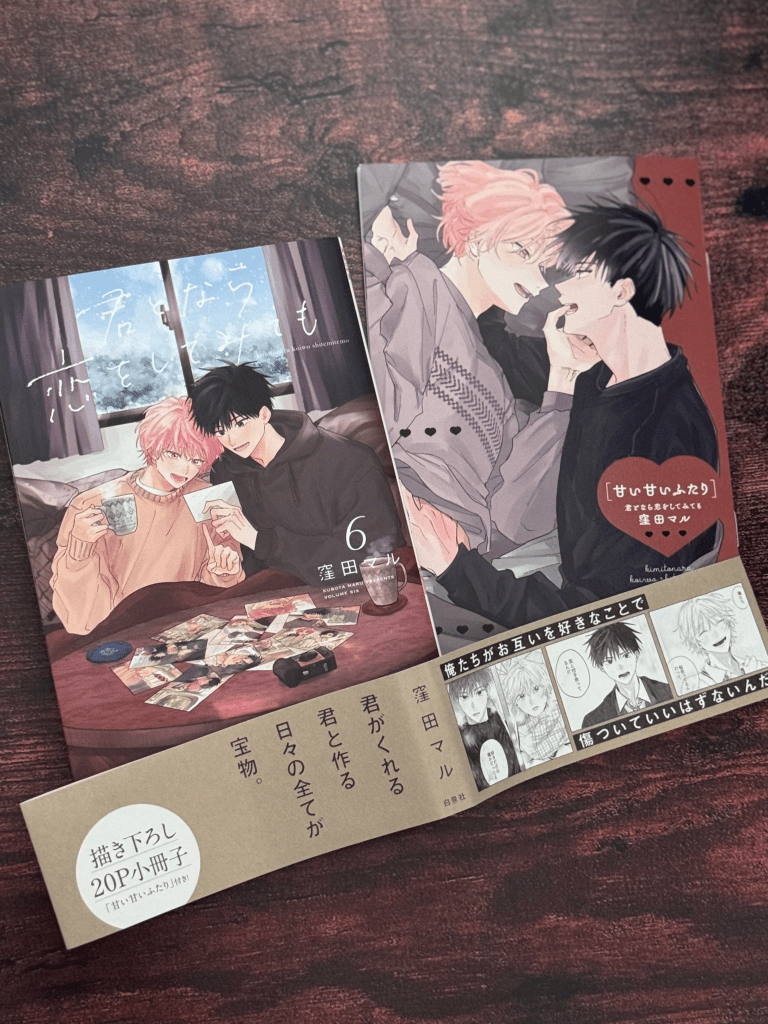
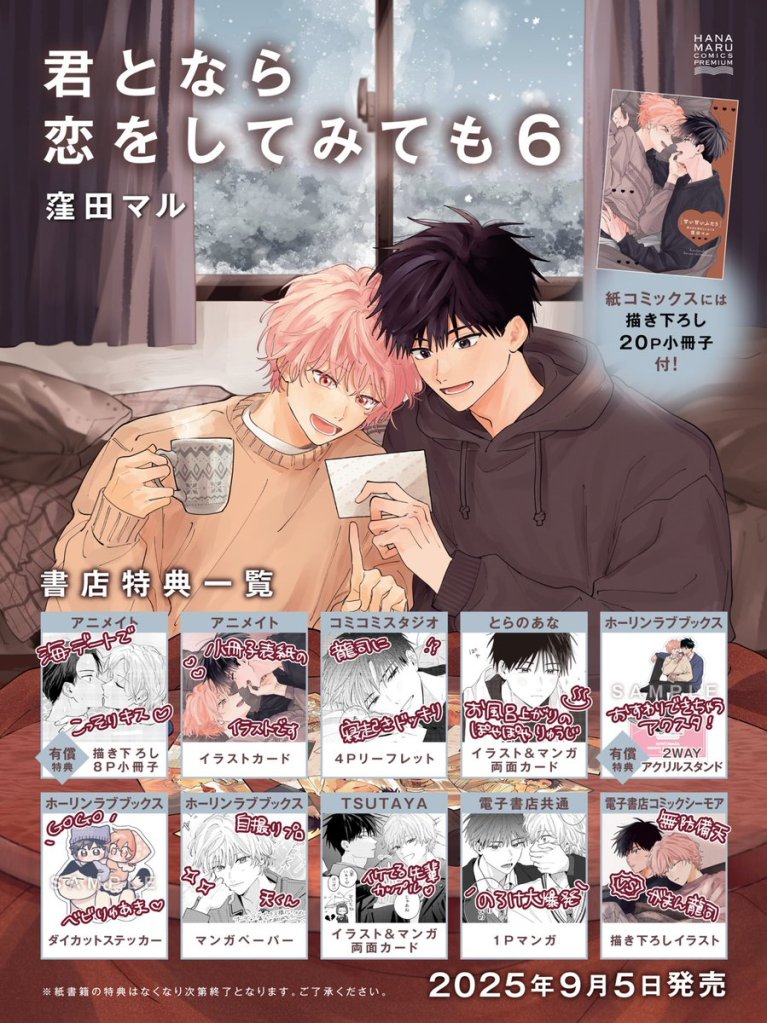
Many mangaka create content specifically drawn for the comics release, called a kakioroshi (描き下ろし). A kakioroshi for a comics volume can be short as one page, but no longer than a regular chapter. More often than not, they serve as an epilogue to the main story or a side story. Additional bonuses, or tokuten (特典), are also common with a comics release. For physical releases, they may be a free like a one-page comic paper (ペーパー) or a 4 page leaflet (4Pリフレット). Booklets (小冊子) that are around 8-16 pages and acrylic standees are other common paid bonus goods. Tokuten are often store specific, but general special editions and publisher bonuses also exist. Digital versions and stores also have bonuses, usually in the form of a comic. Print bonuses are sometimes collected into digital booklets later on. Below are pictures of the print release and a tokuten summary for If it’s You I Might Try Falling in Love Vol. 6 posted by Maru Kubota on Twitter. Some of the tokuten listed include a 8 page booklet, illustration card, 4 page leaflet, a 2-way acrylic stand, a die-cut sticker, and a new (kakioroshi) illustration.
When it comes to promoting online, mangaka or editorial department accounts often post the first chapter of a series. This helps garner interest for the work, typically before the comics release. At the end of the thread, they usually post more information about the work!
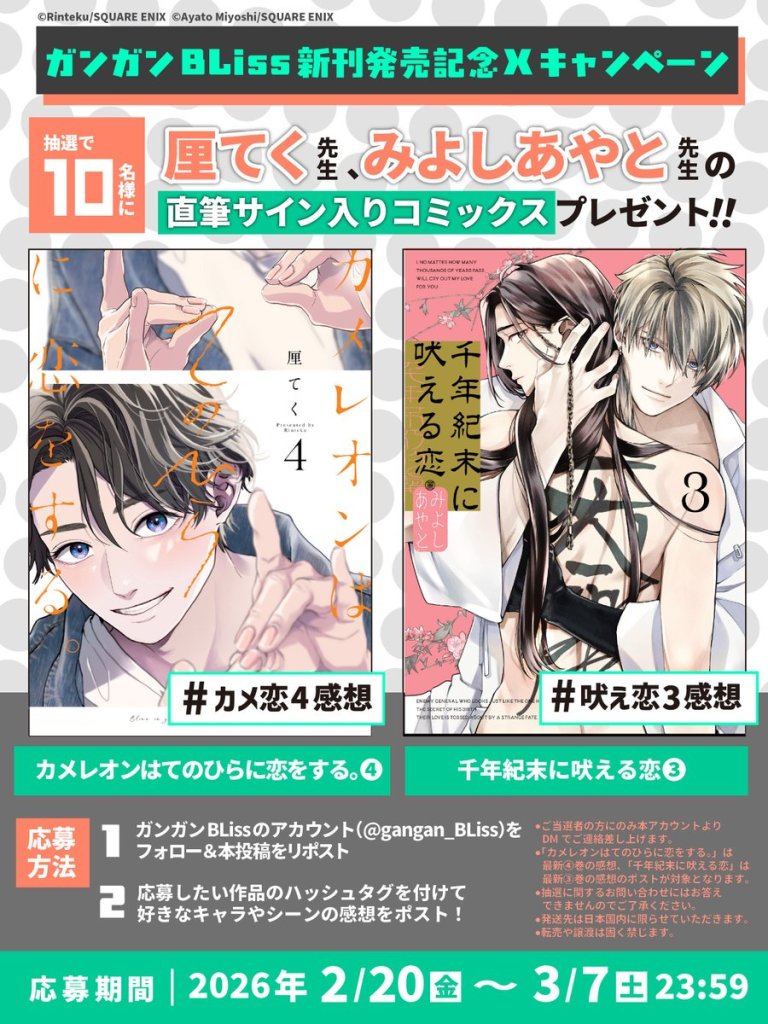
Additional promotions for a comics release include social media campaigns, where people can win signed items like an illustrated POP (shelf-talker card), shikishi (色紙), or a signed book. Some online stores offer lotteries for signed books, called a “web sign”, where winners receive them in the mail. Others, especially Animate, occasionally have lotteries for a “real sign”, meaning an in-person autograph event. Fans usually enter these lotteries through purchasing a copy of the comics. Fairs are another type of promotion for physical manga, where readers can get bonuses with purchase of certain volumes. Booklets with new short comics from a few different creators, bookmarks, postcards, and POPs are a few bonus types. These usually happen during holidays, anniversaries, etc. Fairs are more common with comics that have been out for a while, but occasionally there are some timed with new releases.
For digital manga, publishers will have promotions, or digital platforms will promote specific titles at a time. Titles are either directly discounted or the platform provides a discount coupon. Sometimes, the free preview is increased or chapters become free-to-read for a limited time.
Self-Published Work
While this post is focused on commercial BL, I do want to mention self-published work/doujinshi (同人誌). Doujinshi are important, as many professional mangaka get their start creating them, whether it’s fanwork or original. For those interested in learning more, Breeze, who is working to become a professional BL mangaka, has a great post!
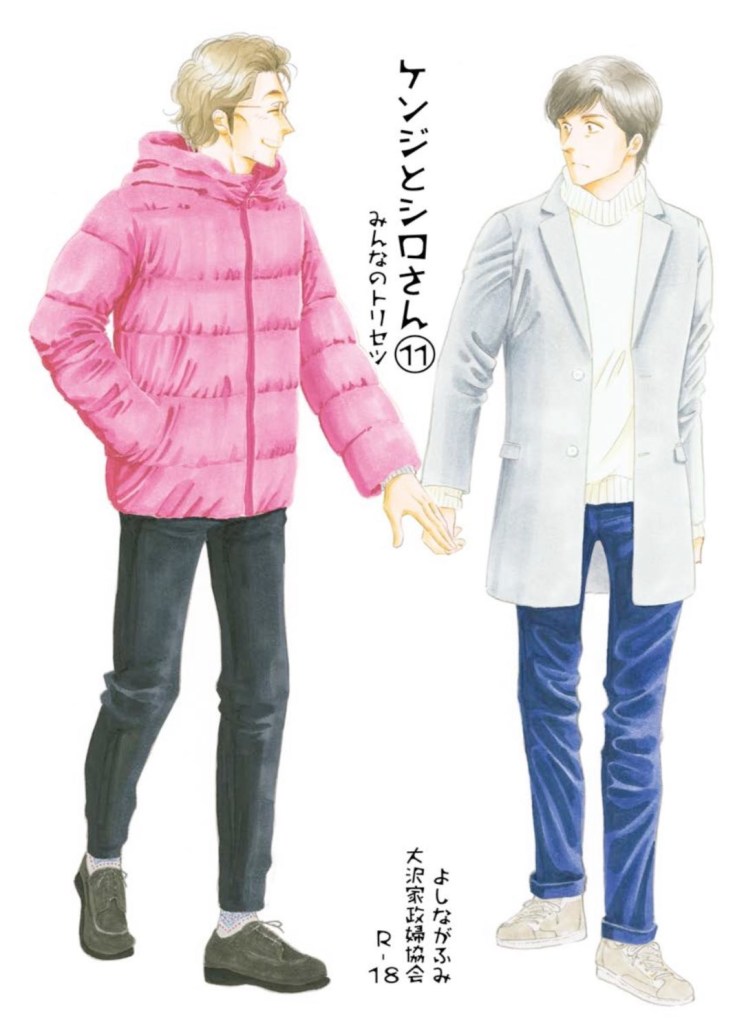
With commercial manga, mangaka occasionally self-publish extras stories and even create their own original merchandise! For example, Fumi Yoshinaga has a BL doujinshi series for What Did You Eat Yesterday? titled Kenji to Shiro-san. Mangaka often sell these works at doujinshi events and sometimes have phsyical and digital copies for sale later on.
Wrap Up
While BL may make up a small percentage of commercial manga, there are plenty of titles and labels. To me, knowing magazines and labels are a great way to discover more titles to read/ They often have different criteria for what kind of stories they publish, making the collections of works coherent in a way. I don’t know how to explain it properly, but it’s something I’ve definitely felt. I know I’ve come to have some favorite magazines/labels! And while this series is focused on manga, I want to mention there are BL novel magazines/labels too. JUNE had an offshoot magazine called Shosetsu JUNE (小説JUNE), as an example.
Once again if there are any corrections, feedback, or questions, please let me know! The next topic will be about BL events in Japan, from pop-ups to exhibitions!
Words/Phrases Mentioned
Mangaka (漫画家) – A manga artist. Mangaka may or may not also write manga they draw.
Shogyo (商業) – Commercial. For example, the term “商業BL” is used to refer to BL manga that’s traditionally published.
Comics (コミックス) – A bound book of manga, containing several chapters
Tankobon (単行本) – A common publishing format in Japan, around the JIS B6 size. Sometimes synonymous with comics.
Yomikiri (読み切り) – A one-shot. In other words, it’s a complete story than a chapter part of a serialized work.
Bangaihen (番外編) – A side story or extra chapter.
Kan (巻) – Counter for volumes
Jo and Ge (上 and 下) – In 2 volume manga series, this is often used instead of numbers.
Sosaku (創作) – Original
Zokuhen (続編) – Continuation
Henshubu (編集部) – Editorial department
Kakioroshi (描き下ろし) – Illustration/comic drawn for a specific purpose, such as a comics release, event, collab, etc.
Tokuten (特典) – Bonus
Paper (ペーパー) – A small single sheet paper usually featuring a comic or illustration.
4 page leaflet (4Pリフレット) – A simple folded leaflet, usually featuring a 2-3 page comi.
Shossashi (小冊子) – Booklet, often 8-16 pages.
Shikishi (色紙) – A usually square art board for illustrations, poems, and autographs. For manga bonuses, illustrations printed on shikishi are common.
Doujinshi (同人誌) – Used to describe self-published works, particularly comics and prose work.
Shosetsu (小説) – Novel
Further Reading/Resources
Boys Love Manga and Beyond: History, Culture, and Community in Japan Chapter:
– A Brief History of Shonen’ai, Yaoi and Boys Love – James Welker
Comic Jun, October 1978 – Slightly Biased Manga
An Incomplete List of Active JPN BL Manga Magazines/Labels – Stacks of BL
The Amateur to Pro Mangaka Pipeline – Breeze
 Stacks of BL
Leave a comment